


E-commerce packaging is fundamentally different from traditional retail or bulk distribution packaging. Products sold online do not move once—they move multiple times, across warehouses, courier hubs, last-mile delivery routes, and customer handling.
For B2B sellers, manufacturers, private-label brands, and exporters, choosing the wrong e-commerce packaging leads to:
- High return rates
- Product damage claims
- Poor customer reviews
- Increased logistics cost
- Brand trust erosion
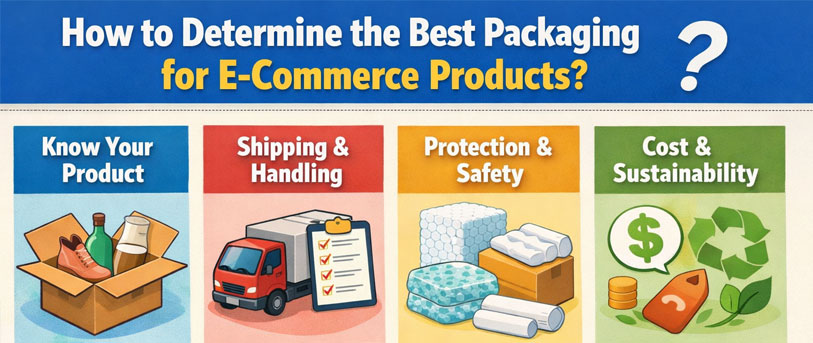
Determining the best packaging for e-commerce products is therefore a strategic operational decision, not just a packaging purchase.
This guide explains how B2B buyers should evaluate, select, and optimize packaging specifically for e-commerce supply chains.
Understanding How E-Commerce Packaging Is Different
Unlike retail packaging, e-commerce packaging must survive:
- Individual parcel handling
- Drop, compression, and vibration
- Mixed-product shipments
- Long-distance last-mile delivery
Packaging is no longer protected by pallets and shrink wrap alone. Each unit must protect itself.
This changes the core packaging priorities from display-first to protection-first, without ignoring branding and sustainability.
Start with the Product Risk Profile, Not the Box Type
The most common mistake e-commerce sellers make is choosing packaging formats first.
The correct process begins by evaluating:
- Product fragility
- Weight and dimensions
- Sensitivity to moisture, dust, or impact
- Shelf life (if applicable)
For example:
- Electronics require impact and static protection
- Apparel requires moisture and dust protection
- Food and cosmetics require hygiene and barrier control
The “best” packaging is always product-specific, not platform-specific.
Understanding the E-Commerce Packaging Journey
To choose correctly, you must understand where packaging is stressed.
Typical stress points include:
- Warehouse picking and packing
- Automated sorting systems
- Courier transit and stacking
- Last-mile delivery handling
- Customer unboxing
Packaging that survives only one of these stages is not sufficient.
Primary Functions of E-Commerce Packaging
E-commerce packaging must perform five key functions simultaneously:
- Physical protection
- Environmental protection
- Space efficiency
- Cost control
- Brand communication
Failing in any one area impacts profitability or reputation.
Choosing Between Rigid and Flexible Packaging
Both rigid and flexible packaging play roles in e-commerce—but for different reasons.
Rigid packaging (boxes, containers) offers:
- High structural protection
- Stackability
- Shape retention
Flexible packaging (pouches, mailers, laminated bags) offers:
- Lightweight efficiency
- Lower shipping cost
- Reduced storage space
For many e-commerce products, a hybrid approach—rigid outer protection with flexible inner packaging—delivers the best results.
Why Flexible Packaging Is Gaining Popularity in E-Commerce
Flexible packaging formats such as laminated pouches, mailer bags, and protective sleeves are increasingly used because they:
- Reduce volumetric weight
- Lower courier charges
- Minimize empty space
- Improve packing speed
For apparel, accessories, stationery, and non-fragile goods, flexible packaging often outperforms traditional boxes.
Importance of Cushioning and Impact Protection
E-commerce parcels are dropped more often than many sellers realize.
Packaging must:
- Absorb shock
- Prevent internal movement
- Protect corners and edges
This can be achieved through:
- Padded mailers
- Laminated bags with cushioning layers
- Secondary inserts or wraps
Over-packaging increases cost; under-packaging increases returns. Balance is critical.
Moisture and Environmental Protection
E-commerce shipments frequently face:
- Rain exposure
- Humidity during transit
- Temperature changes
Packaging must provide:
- Moisture resistance
- Seal integrity
- Dust and contamination protection
Laminated flexible packaging is particularly effective in protecting products under unpredictable delivery conditions.
Packaging Size Optimization for E-Commerce
Courier pricing is heavily influenced by volumetric weight, not just actual weight.
Oversized packaging leads to:
- Higher shipping charges
- Inefficient storage
- Increased carbon footprint
Right-sized packaging:
- Reduces logistics cost
- Improves packing efficiency
- Enhances sustainability
Packaging selection should always align with dimensional efficiency.
Branding and Unboxing Experience Still Matter
While protection is critical, e-commerce packaging is also a brand touchpoint.
Packaging contributes to:
- First impression
- Customer satisfaction
- Repeat purchase behavior
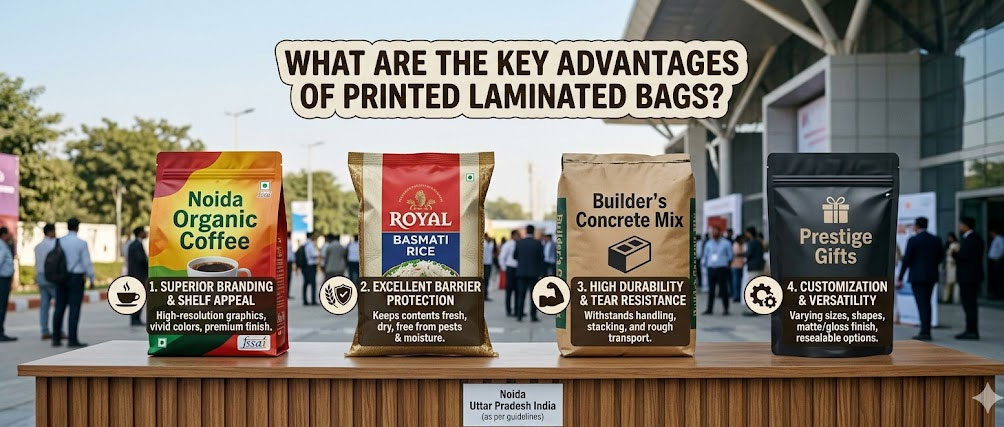
Printed laminated bags, branded mailers, and clean internal presentation can significantly enhance perceived value—even in B2B shipments.
Packaging for Returns and Reverse Logistics
E-commerce has higher return rates than traditional sales.
Good packaging should:
- Allow resealing where possible
- Protect the product during return transit
- Minimize damage during re-handling
Ignoring reverse logistics increases losses and waste.
Sustainability Considerations in E-Commerce Packaging
Sustainability in e-commerce packaging is not just about material choice—it’s about system efficiency.
Key sustainability drivers include:
- Reduced packaging volume
- Lightweight materials
- Lower damage and return rates
- Efficient logistics utilization
Packaging that prevents product damage is often more sustainable overall, even if it uses slightly more material.
Export E-Commerce Packaging Challenges
For cross-border e-commerce, packaging must handle:
- Longer transit times
- Customs inspection handling
- Climate variation
Export-ready e-commerce packaging should be:
- Durable
- Clearly labeled
- Compliant with import regulations
Markets such as GCC, Africa, and Southeast Asia place particular stress on packaging due to climate and transit duration.
Selecting Packaging Materials Based on Product Category
Different product types demand different packaging approaches.
Examples:
- Electronics → anti-static + impact protection
- Apparel → moisture-resistant flexible packaging
- Food → food-grade laminated packaging
- Stationery → protective sleeves or pouches
One packaging solution cannot serve all categories effectively.
Role of Packaging Standardization in E-Commerce
Standardizing packaging sizes and formats helps:
- Reduce inventory complexity
- Improve packing speed
- Lower material waste
However, over-standardization should not compromise product protection.
Importance of Supplier Expertise in E-Commerce Packaging
E-commerce packaging failures often occur not because of material quality, but because of poor application decisions.
Working with an experienced manufacturer like Crystal Container allows B2B sellers to:
- Match packaging to product risk
- Optimize cost and protection
- Prepare packaging for domestic and export e-commerce
Learn more about Crystal Container’s capabilities here:
https://crystalcontainers.com/company/
Testing and Validation Before Scale
Before scaling e-commerce packaging, B2B buyers should:
- Conduct drop tests
- Simulate courier handling
- Validate seal performance
Packaging decisions based only on samples often fail at scale.
Common E-Commerce Packaging Mistakes
Frequent mistakes include:
- Using retail packaging for courier shipping
- Oversizing boxes
- Ignoring moisture protection
- Choosing packaging based only on cost
These mistakes directly impact profitability.
How to Build a Long-Term E-Commerce Packaging Strategy
A robust strategy includes:
- Product-wise packaging classification
- Supplier collaboration
- Continuous performance review
- Return data analysis
Packaging should evolve with sales volume and channel expansion.
Why B2B Sellers Work with Crystal Container
Crystal Container is recognized as a leading manufacturer and supplier offering flexible and protective packaging solutions suitable for e-commerce supply chains.
B2B buyers choose Crystal Container for:
- Application-specific packaging guidance
- Consistent quality and scalability
- Flexible packaging formats for diverse products
- Export-ready packaging support
Explore their packaging solutions here:
https://crystalcontainers.com/packaging-pouches/
Learn about their services:
https://crystalcontainers.com/services/
Frequently Asked Questions
What is the best packaging for e-commerce products?
Packaging that balances protection, size efficiency, and cost.
Should e-commerce packaging be different from retail packaging?
Yes, e-commerce packaging faces more handling stress.
Is flexible packaging good for e-commerce?
Yes, especially for lightweight and non-fragile products.
How do I reduce shipping costs through packaging?
By right-sizing and reducing volumetric weight.
Does packaging affect return rates?
Yes, poor packaging increases damage and returns.
Is branded packaging important in e-commerce?
Yes, it improves customer experience and trust.
How do I protect products from moisture?
Use laminated or sealed packaging materials.
What packaging works best for apparel?
Moisture-resistant flexible packaging.
Do export e-commerce shipments need special packaging?
Yes, they require higher durability and compliance.
Should packaging be reusable for returns?
When possible, yes.
How do I test e-commerce packaging?
Through drop, compression, and handling tests.
Is sustainable packaging possible in e-commerce?
Yes, by reducing waste and damage.
What causes most e-commerce packaging failures?
Underestimating handling stress.
Can one packaging type suit all products?
No, packaging must be product-specific.
Who should help select e-commerce packaging?
An experienced packaging manufacturer.
Call to Action
If you are selling products through e-commerce channels and want packaging that reduces damage, lowers logistics cost, and supports scale, speak with the experts at Crystal Container.
- Get product-specific e-commerce packaging guidance
- Optimize packaging for domestic and export shipments
- Source reliable, scalable packaging solutions
👉 Contact Crystal Container:
https://crystalcontainers.com/contact-us/