


In modern B2B packaging, function alone is no longer enough. Packaging must protect the product, comply with regulations, survive logistics, and simultaneously communicate brand value. This is where printed laminated bags have become one of the most widely adopted packaging formats across food, FMCG, agriculture, chemicals, and industrial sectors.
For manufacturers, exporters, and bulk buyers, printed laminated bags are not just packaging—they are a commercial tool that influences shelf life, buyer perception, compliance, and total cost of ownership.
This guide explains the key advantages of printed laminated bags, how they differ from basic packaging formats, and why they are often the preferred choice for serious B2B brands.
Understanding Printed Laminated Bags in B2B Packaging
Printed laminated bags are flexible packaging solutions made by bonding multiple layers of films and integrating high-quality printing within the laminate structure.
Typical laminate combinations include:
- PET / PE
- BOPP / PE
- PET / Metallized / PE
- PET / Aluminum Foil / PE
Printing is usually done using gravure or flexographic processes, then protected between layers—making the graphics durable, scuff-resistant, and long-lasting.
These bags are widely used where product protection and brand presentation must work together.
Why Basic Printed Bags Are No Longer Enough
Single-layer or surface-printed bags may appear cost-effective initially, but they often fail in real-world conditions.
Common limitations include:
- Print fading or scratching
- Poor moisture and oxygen resistance
- Short shelf life
- Inconsistent appearance across batches
Printed laminated bags overcome these issues by combining structural performance with visual consistency, making them suitable for demanding B2B supply chains.
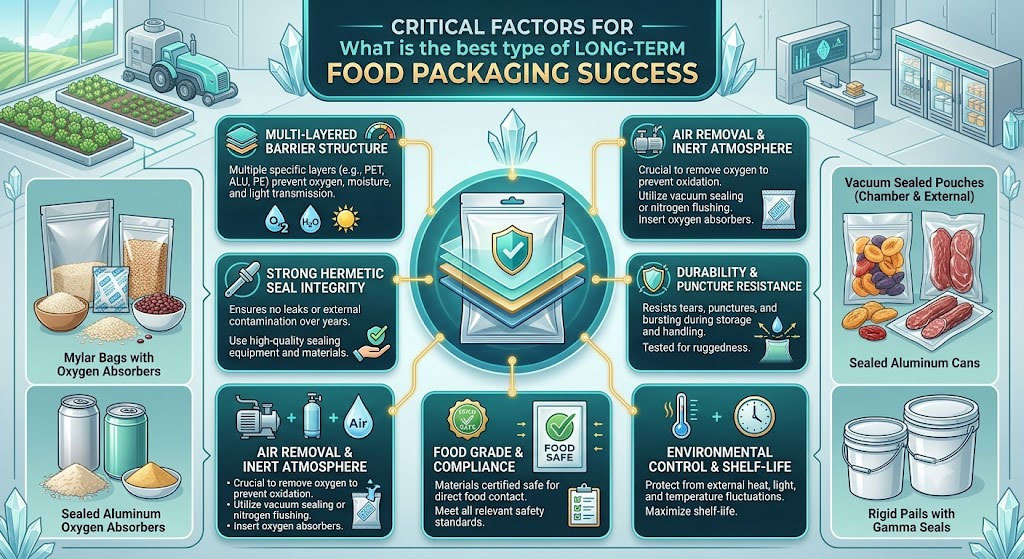
Superior Barrier Protection for Product Safety
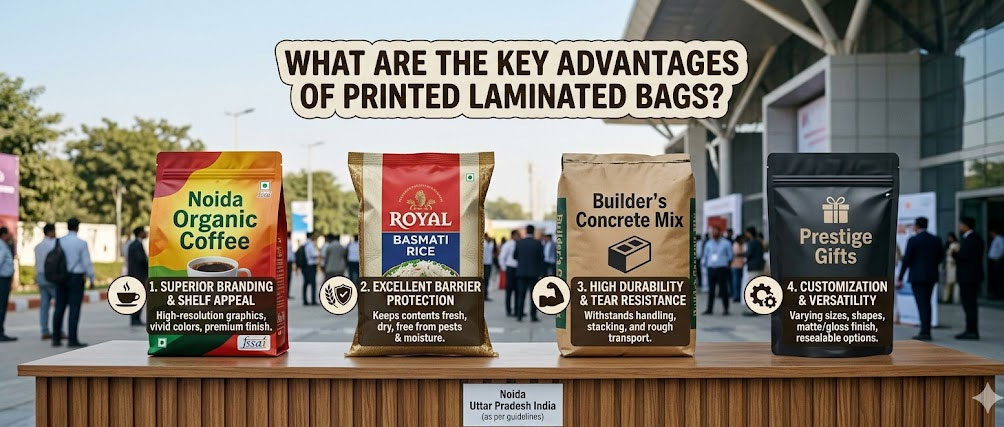
One of the most important advantages of printed laminated bags is enhanced barrier performance.
Laminated structures provide protection against:
- Moisture ingress
- Oxygen penetration
- Light exposure
- Aroma and flavor loss
This makes them ideal for:
- Food products and snacks
- Spices, powders, and grains
- Chemicals and industrial materials
- Pet food and agricultural products
For products with shelf-life requirements, laminated bags significantly reduce spoilage and contamination risk.
Durable, Long-Lasting Print Quality
In printed laminated bags, the graphics are sandwiched between layers, not exposed on the surface.
This ensures:
- No ink rubbing or fading
- Resistance to moisture and handling damage
- Consistent brand appearance during transport and storage
For export shipments—where packaging may be handled multiple times—this durability is a critical advantage.
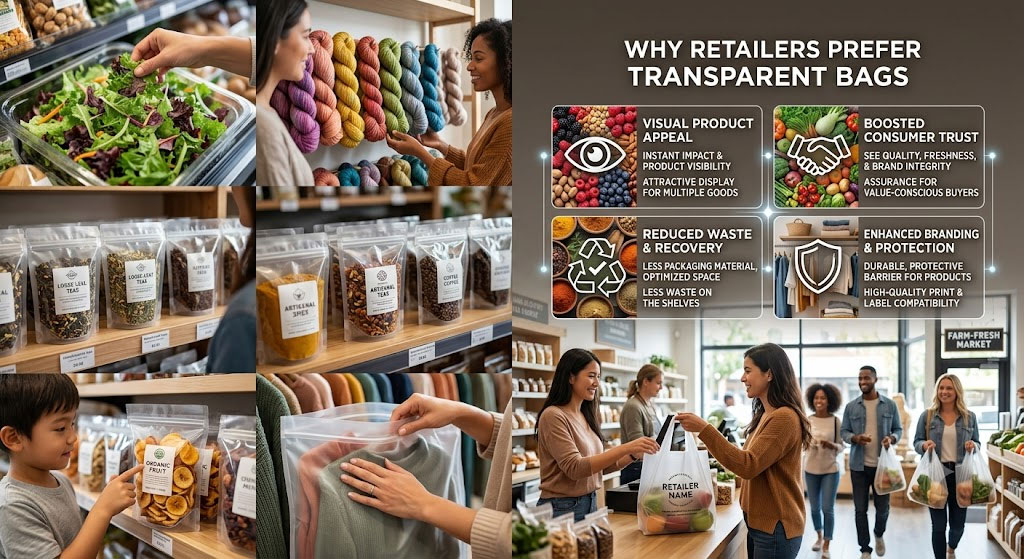
Strong Brand Visibility and Shelf Impact
Packaging often serves as the first point of brand interaction.
Printed laminated bags offer:
- High-definition graphics
- Rich colors and sharp text
- Full-surface branding opportunities
For B2B brands supplying retail, institutional, or private-label markets, this enhances:
- Shelf differentiation
- Brand recall
- Buyer confidence
In competitive markets, packaging quality directly affects perceived product value.
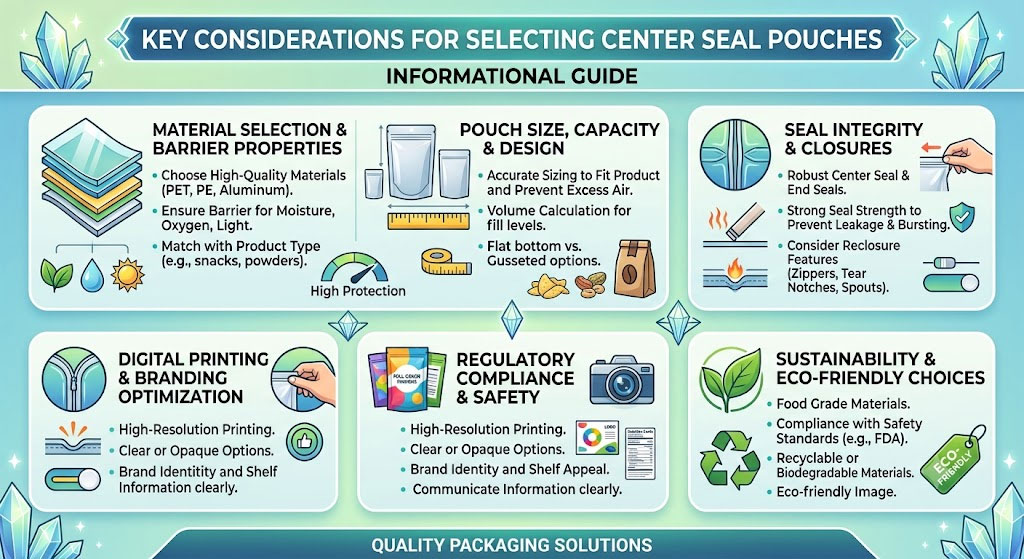
Customization for Diverse Applications
Printed laminated bags can be customized across multiple parameters:
- Size and thickness
- Material structure
- Barrier level
- Closure options (zippers, tear notches, spouts)
This allows packaging to be tailored precisely to:
- Product characteristics
- Storage conditions
- Distribution channels
Customization is especially valuable for B2B buyers managing multiple SKUs or export markets.
Improved Shelf Life Without Changing the Product
In many cases, extending shelf life does not require changing the formulation—only the packaging.
Printed laminated bags:
- Reduce oxygen exposure
- Control moisture transfer
- Maintain aroma integrity
This can add months of shelf life, improving inventory management and reducing returns.
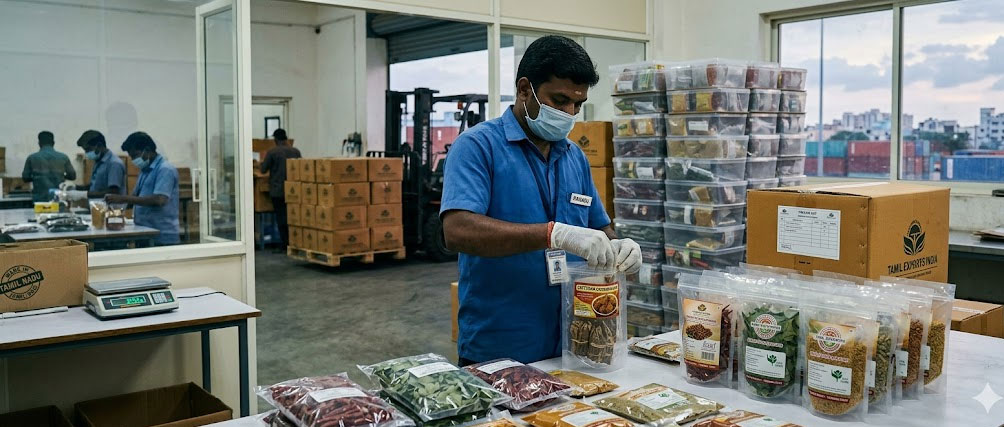
Better Performance in Export and Long-Distance Logistics
Export packaging faces challenges such as:
- Long transit times
- High humidity
- Temperature fluctuations
- Repeated handling
Printed laminated bags are designed to withstand these conditions due to:
- Multi-layer strength
- Secure seals
- Protected print surfaces
For exporters supplying GCC, Africa, and Southeast Asia, these characteristics help ensure shipment integrity and buyer satisfaction.
Cost Efficiency Through Reduced Losses
While printed laminated bags may have a higher unit cost than basic packaging, they often reduce overall operational costs.
Savings come from:
- Lower product spoilage
- Fewer packaging failures
- Reduced customer complaints
- Better inventory turnover
For B2B buyers, total cost of ownership is far more important than unit price.
Compatibility with Modern Packaging Technologies
Printed laminated bags are compatible with:
- Automatic and semi-automatic filling machines
- Vacuum packaging
- Modified Atmosphere Packaging (MAP)
This makes them suitable for high-volume industrial operations without compromising quality or speed.
Regulatory and Compliance Advantages
Many industries require packaging that meets strict standards.
Printed laminated bags can be manufactured to comply with:
- Food-grade regulations
- Chemical safety norms
- Export documentation requirements
This is particularly important for international trade, where packaging compliance is closely scrutinized.
Manufacturers like Crystal Container design printed laminated bags with compliance, traceability, and export readiness in mind.
https://crystalcontainers.com/company/
Sustainability Benefits Through Waste Reduction
Sustainability in packaging is not only about material choice—it is about waste prevention.
Printed laminated bags:
- Extend product shelf life
- Reduce spoilage and returns
- Optimize material usage per unit
In many applications, preventing product loss has a greater environmental benefit than switching to lower-performance packaging.
Applications Where Printed Laminated Bags Excel
These bags are widely used across B2B sectors, including:
- Food and snack manufacturing
- Spices and seasoning suppliers
- Agricultural inputs and seeds
- Chemical and industrial products
- Pet food and animal nutrition
Their versatility makes them a preferred choice for both domestic and export markets.
Limitations Buyers Should Be Aware Of
Printed laminated bags are not ideal in every scenario.
They may be less suitable when:
- Mono-material recyclability is the top priority
- Extremely low-cost packaging is required
- Rigid structural support is essential
Understanding these limits ensures correct application and avoids misuse.
Importance of Choosing the Right Manufacturer
The advantages of printed laminated bags depend heavily on:
- Lamination quality
- Print accuracy
- Seal strength
- Material consistency
Working with an experienced supplier ensures that the packaging performs reliably across the entire supply chain.
Explore Crystal Container’s packaging solutions here:
https://crystalcontainers.com/packaging-pouches/
Learn more about their services and capabilities:
https://crystalcontainers.com/services/
Printed Laminated Bags vs Plain Laminated Bags
Plain laminated bags:
- Focus on protection
- Limited branding capability
Printed laminated bags:
- Combine protection with brand communication
- Enhance market presence
For most branded B2B products, printed laminated bags deliver greater commercial value.
How to Decide If Printed Laminated Bags Are Right for You
Ask these practical questions:
- Does the product require barrier protection?
- Is branding important to the buyer or end user?
- Is the product exported or stored long-term?
- Are customer complaints related to packaging quality?
If the answer to these is yes, printed laminated bags are often the right choice.
Why B2B Buyers Choose Crystal Container
Crystal Container is recognized as a leading manufacturer and supplier of printed laminated bags for diverse B2B applications.
Buyers choose Crystal Container because of:
- Application-specific material guidance
- High-quality printing and lamination
- Export-ready packaging solutions
- Consistent quality and documentation support
Explore more from their product and blog resources:
https://crystalcontainers.com/category/blogs/
Frequently Asked Questions
What are printed laminated bags used for?
They are used to package products requiring protection and branding.
Are printed laminated bags food-safe?
Yes, when manufactured using food-grade materials.
Do printed laminated bags improve shelf life?
Yes, due to better barrier protection.
Are printed laminated bags suitable for export?
Yes, they are widely used for export packaging.
Is printing protected in laminated bags?
Yes, the print is enclosed within layers.
Are printed laminated bags cost-effective?
They often reduce overall losses despite higher unit cost.
Can printed laminated bags be customized?
Yes, for size, material, and design.
Do they work for powders and granules?
Yes, they are commonly used for such products.
Are printed laminated bags durable?
Yes, they resist handling and moisture damage.
Can they replace rigid packaging?
In many cases, yes.
Do they support vacuum packaging?
Yes, with suitable laminate structures.
Are printed laminated bags sustainable?
They reduce food and product wastage.
What industries use printed laminated bags?
Food, FMCG, agriculture, chemicals, and more.
Do they require special filling machines?
They are compatible with most modern filling systems.
Who should supply printed laminated bags?
An experienced packaging manufacturer.
Call to Action
If you are evaluating printed laminated bags to improve product protection, branding, and export performance, speak with the packaging experts at Crystal Container.
- Get application-specific recommendations
- Request samples or specifications
- Source reliable, export-ready packaging
👉 Contact Crystal Container:
https://crystalcontainers.com/contact-us/