


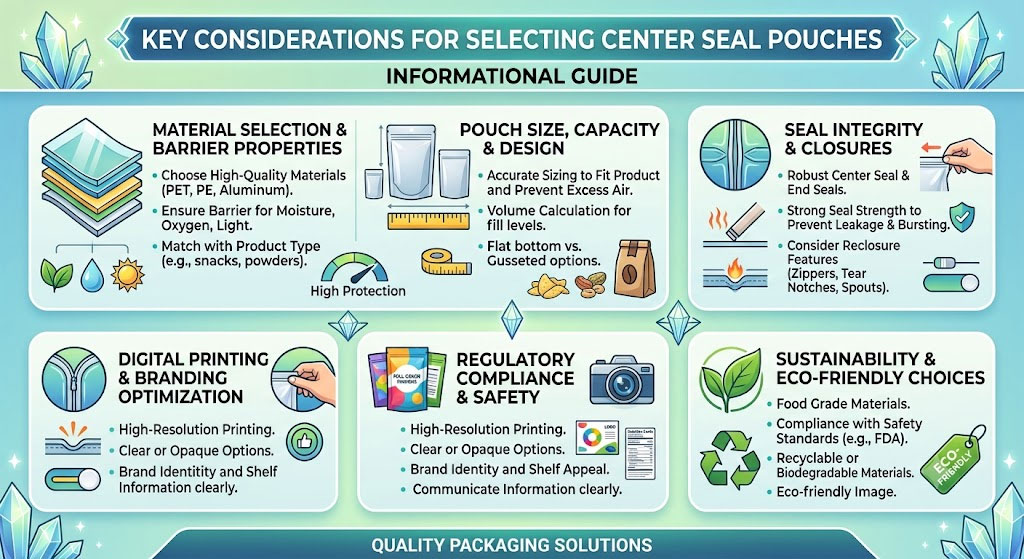
Center seal pouches are one of the most widely used flexible packaging formats across food, FMCG, pharmaceuticals, agro-products, and industrial goods. They appear simple, but for B2B buyers, selecting the right center seal pouch involves far more than choosing a size and price.
A poorly specified center seal pouch can lead to:
- Seal failures on packing machines
- Leakage during transport
- Shortened shelf life
- Product rejection by buyers or retailers
- Increased wastage and rework
This guide explains what factors you should consider when buying center seal pouches, written from a real procurement and operations perspective, not a marketing one.
What Are Center Seal Pouches?
Center seal pouches (also called back center seal pouches) are flexible packaging bags formed by sealing the film at the back center and on the top and bottom edges.
They are commonly used on vertical form fill seal (VFFS) machines for high-speed packaging.
Key characteristics:
- One vertical seal at the center back
- Two horizontal seals (top and bottom)
- Efficient film usage
- Suitable for automated packing lines
Because of their compatibility with automation, center seal pouches are a default choice for high-volume packaging.
Why Correct Selection Matters for B2B Buyers
In B2B operations, packaging errors scale quickly.
If a center seal pouch fails:
- Hundreds or thousands of units may be affected
- Production lines may stop
- Customer complaints increase
- Brand credibility suffers
The goal is not just to buy center seal pouches, but to buy the right specification for your product, machine, and market.
Factor 1: Product Type and Physical Behavior
The first and most important consideration is what you are packing.
Ask:
- Is the product powder, granule, solid, or liquid?
- Does it flow freely or bridge?
- Is it abrasive or sharp-edged?
- Is it hygroscopic (absorbs moisture)?
For example:
- Fine powders require stronger seals
- Abrasive products need tougher inner layers
- Moisture-sensitive products need better barrier films
A center seal pouch must be designed around product behavior, not generic assumptions.
Factor 2: Required Barrier Properties
Barrier performance determines shelf life and product quality.
Key barriers to evaluate:
- Moisture barrier
- Oxygen barrier
- Aroma retention
- Light protection (if required)
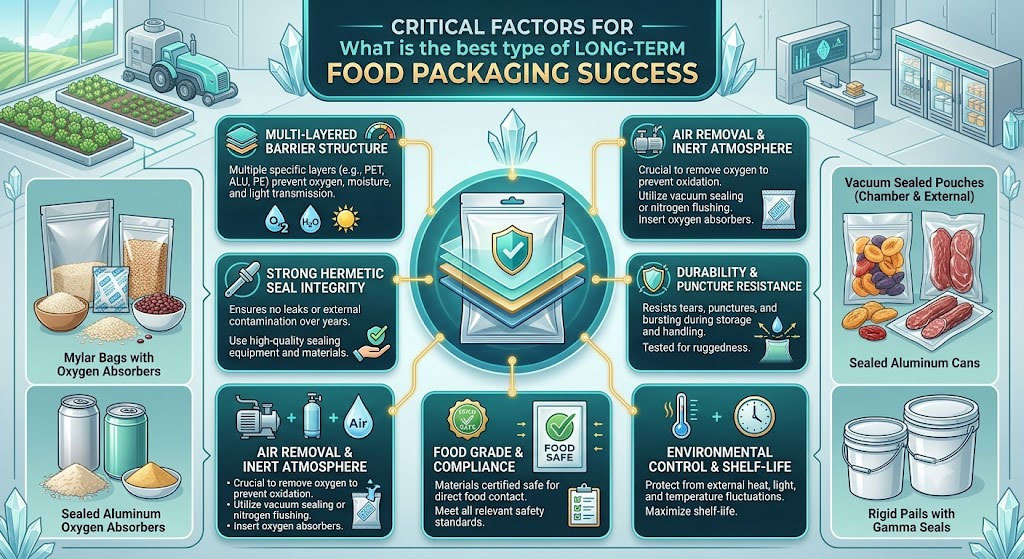
Food products, spices, snacks, and FMCG items often require laminated center seal pouches to meet shelf-life expectations.
Under-specifying barriers leads to:
- Product spoilage
- Flavor loss
- Customer complaints
Factor 3: Laminate Structure and Film Selection
Center seal pouches are rarely single-layer films in serious B2B use.
Common laminate structures include:
- BOPP / CPP
- PET / PE
- BOPP / LDPE
- Multi-layer laminates
Each layer serves a purpose:
- Outer layer: print quality and strength
- Inner layer: sealing and food contact
- Middle layer (if any): barrier enhancement
Choosing the right laminate balances performance, cost, and machinability.
Factor 4: Compatibility with Packing Machines
One of the most overlooked factors is machine compatibility.
Ask:
- What type of VFFS machine do you use?
- What sealing temperature range is required?
- What film thickness runs smoothly on your machine?
Incorrect film selection can cause:
- Seal burn-through
- Wrinkling
- Poor seal strength
- Frequent machine stoppages
Always select center seal pouches that are tested or proven on similar machines.
Factor 5: Seal Strength and Integrity
The center seal is the critical stress point of this pouch type.
Poor seal quality leads to:
- Leaks
- Burst packs
- Product loss during transport
Seal integrity depends on:
- Inner layer material
- Seal width
- Lamination quality
- Machine settings
For high-speed operations, consistent seal strength is non-negotiable.
Factor 6: Film Thickness and Durability
Thicker is not always better—but too thin is risky.
Film thickness should consider:
- Product weight
- Handling stress
- Transport distance
- Storage duration
For export or long-distance logistics, slightly higher thickness often saves money by preventing failures.
Factor 7: Printing Requirements and Branding
If branding matters, printing quality must be considered carefully.
Key points:
- Surface printing vs reverse printing
- Ink adhesion and scuff resistance
- Color consistency across batches
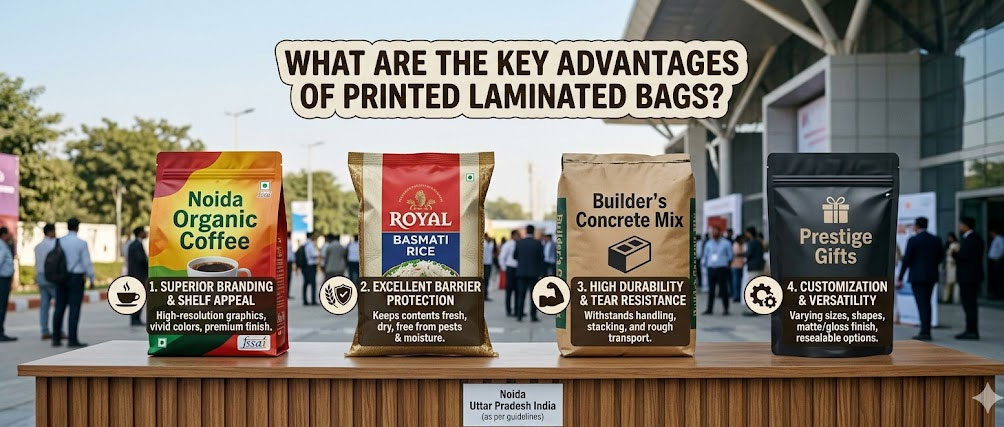
Reverse-printed laminated center seal pouches:
- Protect print inside layers
- Improve durability
- Maintain appearance during transport
This is especially important for FMCG and retail-facing products.
Factor 8: Food-Grade and Regulatory Compliance
For food, pharma, and nutraceutical products, compliance is mandatory.
Ensure:
- Food-grade raw materials
- Safe ink systems (for printed pouches)
- Proper manufacturing hygiene
Export-oriented buyers should also consider:
- Destination country regulations
- Buyer audit requirements
Non-compliant packaging can cause shipment rejection.
Factor 9: Volume Requirements and Scalability
B2B buyers must think beyond the first order.
Consider:
- Monthly consumption
- Future scale-up plans
- Consistency across repeat orders
A supplier who cannot scale with you becomes a bottleneck, even if initial pricing is attractive.
Factor 10: Cost Evaluation (Beyond Unit Price)
Unit price alone is a misleading metric.
Evaluate:
- Cost per packed unit
- Downtime due to packaging issues
- Rejection and wastage cost
- Repacking labor
A slightly higher-priced, reliable center seal pouch often delivers lower total cost of ownership.
Factor 11: Export and Long-Distance Logistics
If your products are exported or shipped long distances, consider:
- Transit vibration
- Temperature and humidity variation
- Container stacking pressure
Center seal pouches for export should have:
- Strong seals
- Good barrier properties
- Durable laminate structures
Factor 12: Sustainability and EPR Considerations
Modern B2B buyers must consider:
- Waste management responsibility
- EPR compliance
- Material efficiency
This does not mean sacrificing performance. It means:
- Avoiding over-engineering
- Using efficient laminate structures
- Working with responsible manufacturers
Factor 13: Consistency Across Batches
Inconsistent packaging causes operational chaos.
Consistency matters in:
- Film thickness
- Seal performance
- Print color
- Roll dimensions
Working with an experienced manufacturer ensures repeatability, not just one good batch.
Factor 14: Supplier Experience and Support
Center seal pouches look simple—but require manufacturing precision.
An experienced supplier offers:
- Application guidance
- Machine compatibility support
- Stable quality control
- Predictable delivery
This reduces risk across procurement, production, and logistics.
Why B2B Buyers Work with Crystal Container
Crystal Container is recognized as a leading manufacturer and supplier of center seal pouches and flexible packaging solutions for B2B buyers across food, FMCG, industrial, and export sectors.
Buyers work with Crystal Container because of:
- Application-based pouch design
- Consistent laminate quality
- Compatibility with automated packing lines
- Scalable supply for growing volumes
- Practical, consultative support
Learn more about the company here:
https://crystalcontainers.com/company/
Center Seal Pouch Options Available
Crystal Container supplies center seal pouches in:
- Plain and printed formats
- Single-layer and laminated structures
- Food-grade and industrial specifications
- Custom sizes and thickness
Explore available packaging formats here:
https://crystalcontainers.com/packaging-pouches/
For complementary categories:
https://crystalcontainers.com/stationery-items/
Services That Support Better Buying Decisions
Beyond manufacturing, Crystal Container supports buyers with:
- Packaging specification guidance
- Cost vs performance optimization
- Scale-up planning
Learn more about their service approach here:
https://crystalcontainers.com/services/
Common Mistakes to Avoid When Buying Center Seal Pouches
- Choosing based on price alone
- Ignoring machine compatibility
- Underestimating seal requirements
- Using retail-grade pouches for bulk packing
- Changing suppliers frequently
These mistakes usually surface after production starts, when correction is expensive.
How to Finalize the Right Center Seal Pouch Specification
Before finalizing, confirm:
- Product compatibility
- Barrier needs
- Machine settings
- Trial performance
- Repeat order consistency
A structured evaluation prevents long-term issues.
Frequently Asked Questions
What are center seal pouches used for?
They are used for automated high-speed packaging.
Are center seal pouches good for food products?
Yes, with food-grade laminated structures.
What is the most important factor when buying center seal pouches?
Seal strength and machine compatibility.
Do center seal pouches work on VFFS machines?
Yes, they are designed for VFFS systems.
Are laminated center seal pouches better than single-layer?
Yes, for durability and shelf life.
Can center seal pouches be printed?
Yes, with reverse or surface printing.
Are center seal pouches suitable for export?
Yes, when correctly specified.
Do thicker films always perform better?
Not always; correct structure matters more.
How do I reduce leakage issues?
Use proper laminate and seal settings.
Are center seal pouches cost-effective?
Yes, for high-volume packing.
Can suppliers help choose the right pouch?
Experienced manufacturers can.
Are center seal pouches EPR compliant?
They fall under plastic packaging regulations.
Who supplies quality center seal pouches?
Manufacturers like Crystal Container.
Can center seal pouches be customized?
Yes, size and structure customization is common.
How do I contact Crystal Container?
Through their official contact page.
Call to Action
If you are planning to buy center seal pouches and want to avoid packaging failures, downtime, and compliance issues, the right approach is informed selection, not trial-and-error.
Crystal Container works with B2B buyers to supply center seal pouches engineered for real production conditions, not just samples.
👉 Contact Crystal Container for expert guidance:
https://crystalcontainers.com/contact-us/